“growing coffee” search results (22900)

Talk about the basic knowledge of growing fine coffee
Coffee is now widely grown in the ribbon between the Tropic of Cancer. Coffee grown in different regions has different flavors. The unique soil, climatic conditions and planting methods of a country make the coffee produced in that country have a unique flavor. French winemakers call this phenomenon regional style. Geographically, there are three global coffee growing areas
2015-08-18 Talk about coffee planting boutique basics common sense now Tropic of Cancer occasional belt
Coffee trees grow around the equator.
Coffee trees grow in tropical or subtropical agricultural gardens centered around the equator and called coffee belts. Most of the coffee production is between the Tropic of Cancer, 25 degrees north of the tropical or subtropical equator and 30 degrees south of the equator. An area with an annual average temperature of 16-25 degrees Celsius, no Frosts Descent and rainfall of 1600-2000 mm. At present, coffee is mainly produced by seven countries.
2015-07-01 Coffee tree grow equator center coffee for the middle
The influence of altitude on the flavor of coffee
The influence of geographical location on the flavor of coffee beans is profound. All coffee grows in the tropics, and the altitude at which it grows has a profound effect on the taste of coffee. The tropical belt extends from 30 degrees north latitude to the equatorial regions of the southern mountains that produce the world's truly high-quality Arabica coffee. Central and South America, South Asia and some Pacific islands, and south-central Africa are also the most important in the world.
2014-08-25 Coffee knowledge coffee flavor coffee planting altitude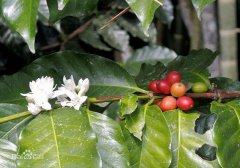
The production zone suitable for growing coffee beans in China can you grow coffee beans in China?
China's coffee producing areas are mainly in Hainan, Yunnan and Guangdong; the northern part of Hainan Island in China, the southern part of Yunnan Province, is located between 15 degrees north latitude and the Tropic of Cancer, which happens to be in this golden zone. The day and night temperature in its coffee is not too strong and bitter in South America, India and Africa, but strong but not bitter, fragrant but not strong, very unique. With a little fruit flavor, it is the top grade of coffee.
2016-05-03 China suitable for planting coffee beans production zone national energy coffee producing areas
The natural environment in which coffee trees grow. Planting conditions of coffee trees.
In botany, coffee trees belong to the evergreen trees of the subgenus Rubiaceae, and coffee beans, commonly known as coffee beans, are actually the seeds of the fruit of coffee trees, just because they are shaped like beans, so they are called coffee beans. Climate is the decisive factor for coffee cultivation. Coffee trees are only suitable for growing in the tropics or subtropics, so the zone between latitude 25 degrees south and north is the most suitable for growing coffee. And this...
2015-11-02 Coffee tree growth natural environment planting conditions coffee botany belong to
The influence of geographical location on the flavor of coffee beans is profound.
The influence of geographical location on the flavor of coffee beans is profound. All coffee grows in the tropics, and the altitude at which it grows has a profound effect on the taste of coffee. The tropical belt extends from 30 degrees north latitude to the equatorial regions of the southern mountains that produce the world's truly high-quality Arabica coffee. Central and South America, South Asia and some Pacific islands, south-central Africa is also the most important in the world.
2015-10-15 Geographical location coffee beans flavor influence profound geographical location
Coffee trees grow around the equator.
Coffee trees grow in tropical or subtropical agricultural gardens centered around the equator and called coffee belts. Most of the coffee production is between the Tropic of Cancer, 25 degrees north of the tropical or subtropical equator and 30 degrees south of the equator. An area with an annual average temperature of 16-25 degrees Celsius, no Frosts Descent and rainfall of 1600-2000 mm. At present, coffee is mainly produced by seven countries.
2015-05-29 Coffee tree grow equator center coffee for the middle
The technique of growing small Coffee-- integral pruning
Cultivation technique of small-grain coffee: integral pruning. Single trunk plastic surgery is a method of cultivating a trunk, using the primary branch as the backbone branch and the secondary and tertiary branches as the main fruiting branch.
2014-09-02 Coffee knowledge small grains of coffee techniques for growing coffee trees
Boutique coffee growing areas: Brazilian coffee growing areas rating
Brazil is significantly lower in elevation than other producing countries in Central and South America, with a greater proportion of estates below 1,000 meters. The landscape here is flat and monotonous, lacks microclimate, and is accustomed to using non-shade tree (insolation) cultivation methods, thus developing Brazil's unique soft bean flavor-low acidity, nutty, chocolate sweet and mellow, but slightly woody and earthy, floral and
2015-12-04 Boutique Coffee Region Central and South America Other Yield Elevation Compare Brazil Significant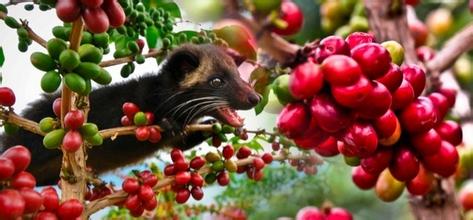
What is the growing environment of coffee beans? What conditions must be met to grow coffee beans?
Coffee is native to tropical Africa. The origin of the small seed species is the tropical plateau of Ethiopia. It is between 900 and 1800 meters above sea level with an average annual temperature of 19. C; the mid-grain species is native to the tropical rain forest of the Congo, with an average annual temperature of 2126 at an altitude of less than 900 meters. C . Their origins are shaded or semi-shaded forests and river valleys, so the formation of coffee requires calm wind, cool and wet.
2015-11-24 Coffee beans growth environment how reach conditions talent planting coffee origin
Relationship between altitude of Fine Coffee Bean planting and Coffee Flavor
The influence of geographical location on the flavor of coffee beans is profound. All coffee grows in the tropics, and the altitude at which it grows has a profound effect on the taste of coffee. The tropical belt extends from 30 degrees north latitude to the equatorial regions of the southern mountains that produce the world's truly high-quality Arabica coffee. Central and South America, South Asia and some Pacific islands, south-central Africa is also the most important in the world.
2015-10-26 Boutique coffee beans planting altitude coffee flavor relationship geographical location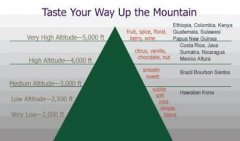
Talk about the influence of altitude on the flavor of coffee
The influence of geographical location on the flavor of coffee beans is profound. All coffee grows in the tropics, and the altitude at which it grows has a profound effect on the taste of coffee. The tropical belt extends from 30 degrees north latitude to the equatorial regions of the southern mountains that produce the world's truly high-quality Arabica coffee. Central and South America, South Asia and some Pacific islands, and south-central Africa are also the most important in the world.
2015-04-17 Talk about altitude height coffee flavor influence geographical location coffee beans flavor.
Costa Rican coffee growing environment
This kind of coffee can grow above 1500 meters above sea level. Altitude has always been a problem for coffee growers. The higher the altitude, the better the coffee beans, not only because the higher altitude can increase the acidity of the coffee beans and thus increase the flavor, but also because the night temperature at the higher altitude is lower, which can make the trees grow slowly, thus making the coffee beans have a stronger flavor. In addition, due to the high
2016-05-31 Costa Rica coffee growth environment this kind of coffee in order to altitude 150
Coffee beans Six world-famous Ethiopian coffees
1. Limu coffee grows between 1400 meters and 2000 meters above sea level. washed coffee. Excellent quality, with intense nutty aromas, moderate acidity and wine intensity. Annual production of 29,000 tons. Gima coffee grows between 1400 and 1800 meters above sea level. Sunburn coffee. Slightly sour, nutty and long finish. Annual production of 70,000 tons. 3. Gambi coffee grows
2014-09-19 Ethiopian coffee coffee beans
6 Types of Ethiopian Coffee
1. Limu coffee grows between 1400 meters and 2000 meters above sea level. washed coffee. Excellent quality, with intense nutty aromas, moderate acidity and wine intensity. Annual production of 29,000 tons. Gima coffee grows between 1400 and 1800 meters above sea level. Sunburn coffee. Slightly sour, nutty and long finish. Annual production of 70,000 tons. 3. Gambi coffee grows
2014-07-14 Coffee knowledge Ethiopian coffee Coffee encyclopedia
Coffee growing area of Tanzania
Coffee growing area: African Coffee: medium concentration Coffee description: refreshing acidity and medium mellow complement blackcurrant and sweet orange flavors processing method: washing with flavors: blackcurrant, orange and lemon-like coffee: Kenya coffee Tanzania coffee from the rich soil of the East African Rift Valley, is an outstanding representative of quality coffee from this region. Its clear
2016-05-31 Tanzania coffee growing area Africa species medium concentration
Coffee growing area of Tanzania
Coffee growing area: African Coffee: medium concentration Coffee description: refreshing acidity and medium mellow complement blackcurrant and sweet orange flavors processing method: washing with flavors: blackcurrant, orange and lemon-like coffee: Kenya coffee Tanzania coffee from the rich soil of the East African Rift Valley, is an outstanding representative of quality coffee from this region. Its clear
2016-05-31 Tanzania coffee growing area Africa species medium concentration
The coffee market in Japan is growing.
On August 16, according to Japanese media reports, Japan's domestic coffee market continues to expand, although the population is decreasing. By 2015, the consumption of coffee such as households and large chain stores has set a new history for three consecutive years, and the import of raw beans has also been increasing. Different brands of coffee in convenience stores actively participate in the market.
2016-08-17 Japan coffee market constantly growing
The coffee market in Japan is growing.
Japan's domestic coffee market continues to expand, although the population is shrinking, as of 2015, the consumption of coffee such as households and large chain stores has set a new history for three consecutive years, the import of raw beans has also been increasing, and different brands of coffee in convenience stores have actively participated in the market.
2016-08-22 Japan coffee market constantly growing
Natural Environmental conditions for growing Coffee: an introduction
The ideal environmental conditions for planting Arabica coffee trees are as follows:
2014-07-04 Coffee knowledge coffee planting coffee tree growth conditions